Technical Guide · DIY Maintenance
How to Clean an HVAC Condensate Drain Line & Drain Pan
Same procedure we use in the field — outdoor wet vac first, then coil and pan inside the cabinet.
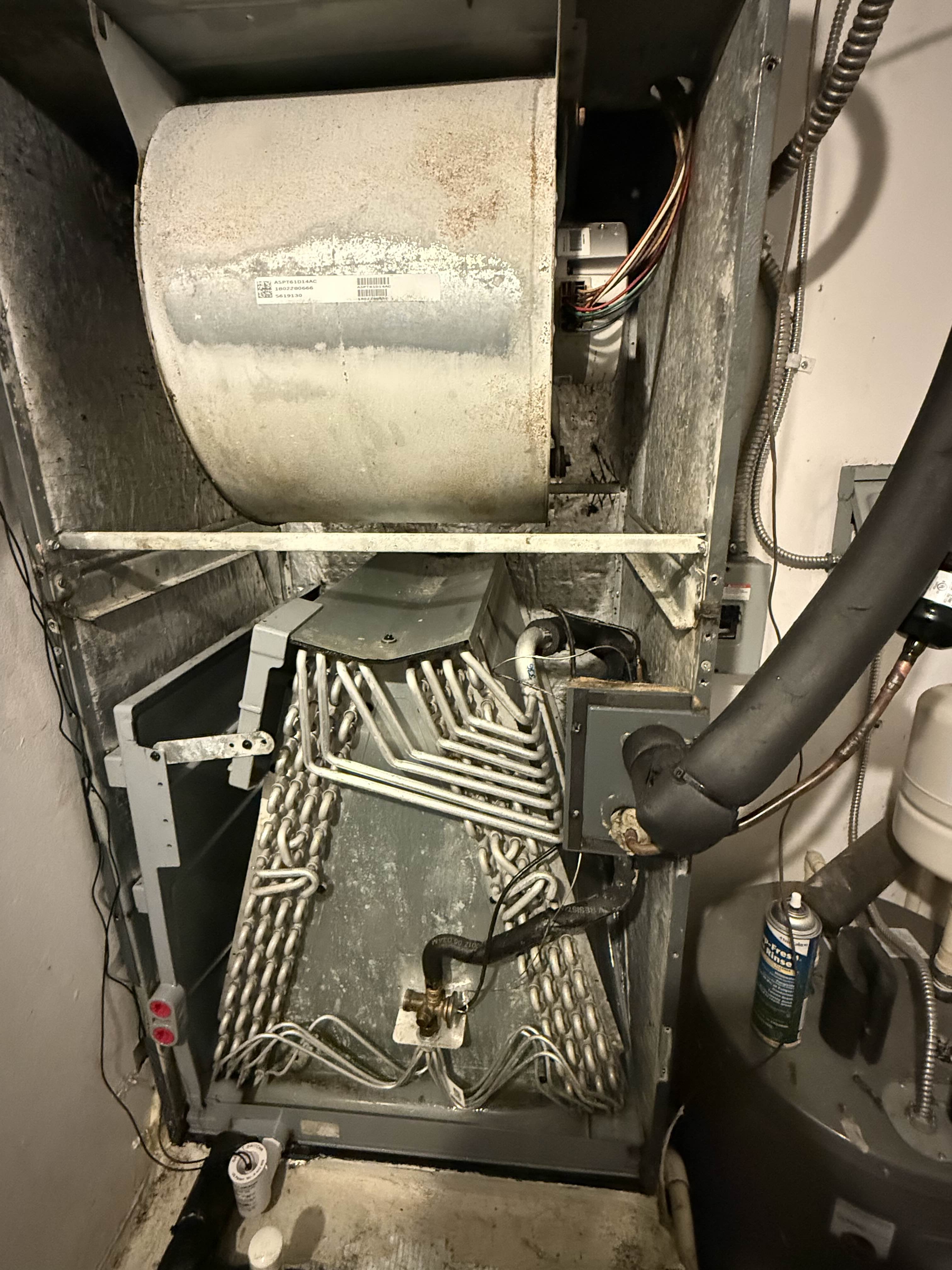
Upflow handler: blower (top), A-coil (center), drain pan & PVC (bottom). Inline float switch on drain line.
A clogged condensate drain is one of the most common — and most preventable — HVAC failures in Florida. When the line blocks, water backs up at the coil, fills the drain pan, and can overflow, trip a safety switch, or stain ceilings before you notice a comfort problem.
This page expands on our video walkthrough: shut down power, hook a wet/dry vac to the outdoor termination, confirm suction at the indoor cleanout, then service the coil and pan. Energy Whisperer includes this in our Meta Tune program.
How condensate gets out
Coil
Humid air hits cold fins → water condenses
Pan
Drips into primary drain pan under coil
PVC line
¾" pipe carries it outdoors or to a pump
In peak Florida humidity a system running hard can produce several gallons of condensate per day. Algae and slime thrive in that warm wet pipe — which is why you clear the drain line first, not the pan.
Tools you'll need
The procedure we use
Drain line first with outdoor suction. Cabinet work comes after the line is pulling clear.
Shut off power at the breaker panel
Turn off both the indoor air handler breaker and the outdoor condenser breaker — not just the thermostat. This kills the blower, outdoor unit, controls, and any UV light in the cabinet.
Locate both drain connections
Indoors: where PVC leaves the air handler — note the cleanout tee.
Outdoors: open PVC stub near ground level, usually near the condenser. Same line, both ends.
Hook up the wet/dry vac outside
Remove the shop vac's paper filter. Seat the hose on the outdoor PVC end, seal tight with duct tape, turn on.
Listen at the indoor cleanout
While the vac still runs outside, remove the cleanout cap indoors and listen. You should hear the vacuum pulling through the drain — line is clear end to end.
No sound? Clog still in there. Improve the seal, run longer, or call a tech before opening the coil cabinet.
Open the air handler — inspect the pan
Open the correct panel (bottom on many heat pump handlers, top on furnace/A-coil setups). Check:
- Float switch — look only, don't lift or trip
- Standing water — confirms clog happened
- Drain outlet — not packed with gel
- Pan condition — rust or cracks = replacement
Spray the evaporator coil
If fins are in good shape, apply foaming no-rinse coil cleaner per can directions. Saturate and let dwell.
Corroded or deteriorating coil? Stop — call a pro.
Wipe the drain pan
Separate from the coil step. Wipe the pan with a towel using the leftover cleaner and residue from the coil drip — not soap and water. Vac out any remaining moisture if needed. Don't touch the fins.
Disconnect the outdoor vacuum
Turn off the shop vac, remove hose and tape. Confirm outdoor stub is open.
Prime the trap
Vacuuming emptied the trap. Refill before restart:
- Outdoor ground dip: line goes underground and back up — pour slowly into outdoor exit (thin trickle)
- Indoor P-trap: pour slowly into cleanout tee until water exits outdoors without backing up
Sluggish flow? Keep pouring slowly — dry traps and long runs need more water than you'd expect.
Restore power & verify
Replace caps and panels. Both breakers on. Run a cooling cycle — condensate exits outdoors, primary pan stays dry.
Positive vs. negative pressure
Condensate drains by gravity, but the drain opening is not at room pressure. The blower creates a differential across the cabinet — typically 0.3 to 1.0+ inches of water column (in. w.c.) on residential equipment, higher on restrictive duct systems. The coil and pan sit on either the return (suction) or supply (discharge) side of the blower. A trap full of water isolates the pressurized cabinet from the drain pipe; without that water column, air moves through the line and condensate behavior gets unpredictable even when nothing is physically plugged.
Negative pressure · coil on return side
Dominant on upflow handlers: return air passes through the coil before the blower wheel. Pan sits at the blower inlet — a negative-pressure zone vs. the surrounding space.
Dry trap → suction pulls air up the drain line toward the pan → gurgling, bubbles, sluggish drainage. Trap leg depth is engineered to hold a water column that resists that suction (IMC 307.2.4 — trapped per manufacturer instructions).
Positive pressure · coil on discharge side
Common on downflow and many horizontal attic coils: blower pushes air through the coil. Pan sits in a positive-pressure zone vs. outside the drain termination.
Dry trap → conditioned air blows out the drain line. Manufacturer trap specs often call for deeper legs or different geometry than upflow models — not interchangeable. Horizontal runs with marginal pitch + positive pressure at the pan are a common overflow recipe.
Components to know
Primary drain pan
Under the coil. Standing water after a clog = line wasn't draining. Outlet fitting can pack with gel.
Secondary overflow pan
Under the whole unit. Should be dry normally. Water here = primary already failed.
Float switch
Kills power when water rises — in overflow pan or inline on drain line (see photo). Look only; don't trip.
Cleanout tee
Capped PVC tee near air handler. Listen here while vac runs. Use for priming.
Drain trap
Water seal at air handler (or ground dip on underground runs). Empty after vacuuming — must reprime.
Coil location
Heat pump: coil often low, bottom panel. Furnace + A-coil: often top panel. Pan always under coil.
Warning signs
- ›Standing water in primary drain pan
- ›Water in secondary overflow pan
- ›System won't run — float tripped
- ›Gurgling at drain or unit
- ›Musty smell from vents
- ›No drip outdoors during cooling
- ›Overflow stub dripping on exterior
Also see AC leaking water inside.
If the line still won't clear
- Packed pan outlet — clear at source, re-vac from outside
- Condensate pump — check strainer, float, discharge tube
- Line pitch / sag — clog returns in days; needs pro
- Mechanical snake — pro territory in wall cavities
Common mistakes
Energy Whisperer · Tampa Bay
DIY drain line fix — your next steps
Watch, read, check your bill — or skip straight to a free audit. No pressure to buy anything.
- Step 1
Watch the walkthrough
See the outdoor wet-vac method our techs use in Tampa Bay homes.
Watch video - Step 2
Read the full guide
Step-by-step procedure, trap priming, and what to do if it still won't clear.
You're here
- Step 3
Check your energy bill
AC still running hard after a clog? Estimate what your home is costing you.
Energy calculator
Rather have us handle it?
Energy Whisperer clears drains, reprimes traps, and services pans across Wesley Chapel & Tampa Bay since 2017.
Includes drain service in Meta Tune · HVAC warning signs